
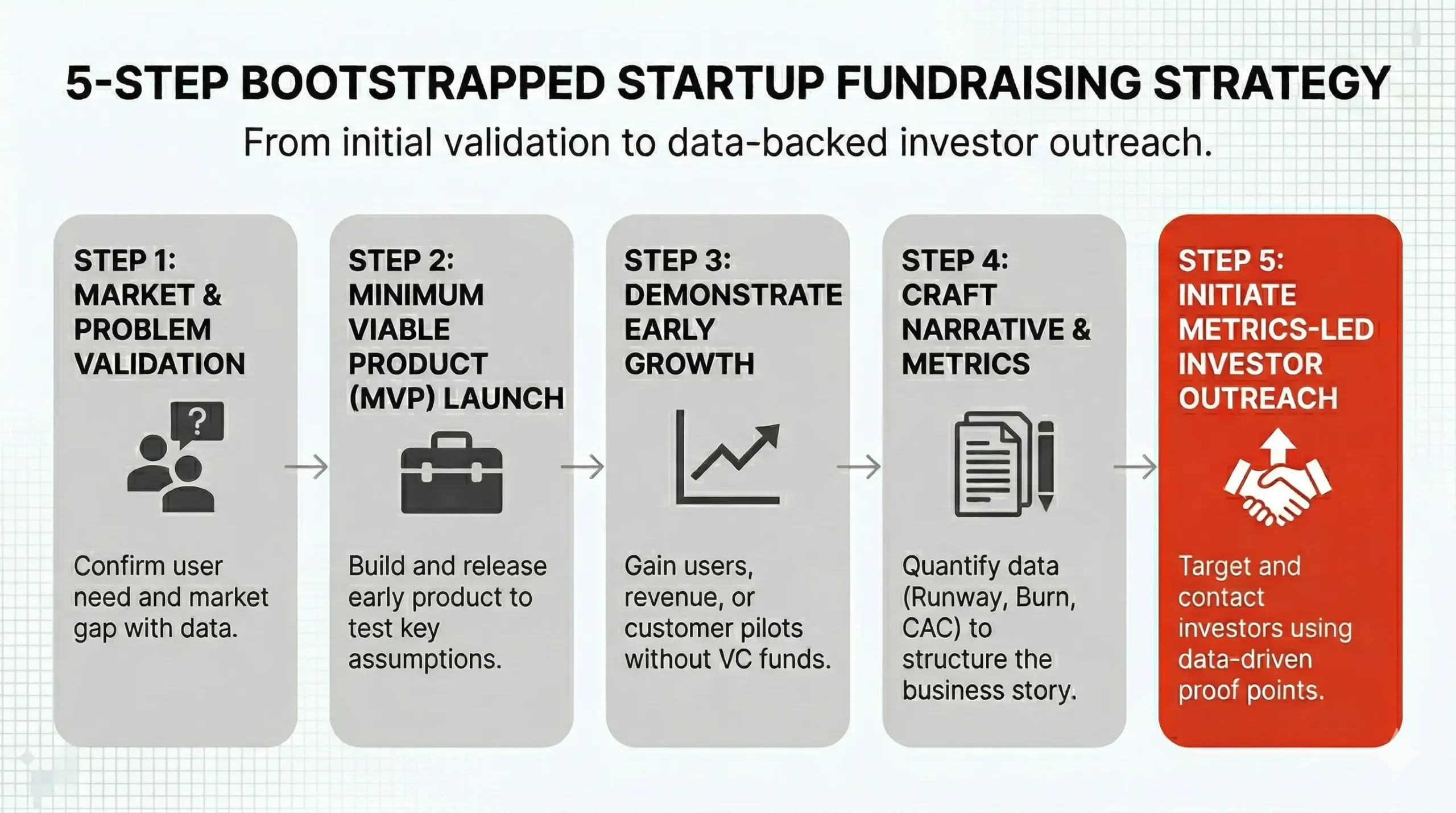
Most founders assume a rejected fundraising round is the end of the road. In reality, a booted startup often has more options than it realizes. The key is to treat the rejection as data, not a verdict, and to follow a structured recovery plan.
How to Diagnose the Rejection and Reset Your Fundraising Approach
The first step after a boot is to conduct a brutal post-mortem. Gather every piece of feedback from investors who passed, no matter how vague. Look for patterns: was it the market size, the team, or the traction metrics? A common mistake is to assume the problem is the pitch deck when it’s actually the business model.
Once you have a diagnosis, reset your strategy. This means redefining your target investor list. Instead of blasting the same deck to a wider net, focus on investors who have funded similar pivots. For example, if your SaaS product was booted for weak retention, target investors who specialize in early-stage B2B and value deep customer interviews over vanity metrics.
We’ve seen founders waste months polishing a deck that was never the issue. The more useful approach is to run a ‘pre-mortem’ with a trusted advisor before your next pitch. Simulate the toughest questions and pressure-test your assumptions. This isn’t about making the deck prettier; it’s about making the business stronger.
What Comes Next: Rebuilding Momentum and Investor Confidence
After a boot, the immediate priority is to rebuild momentum. This means shipping a tangible milestone that directly addresses the investor feedback. If the concern was traction, launch a targeted campaign to grow your user base. If it was the team, consider adding a key hire with domain expertise.
Investor confidence is rebuilt through consistent, transparent communication. Send a brief update to your existing network, acknowledging the setback and outlining your revised plan. This isn’t about spinning the story; it’s about demonstrating resilience. According to some sources, startups that successfully raise after a boot often do so within six to twelve months, but the timeline varies widely. For a complementary read on the same theme, see R6 Marketplace: How It Compares to Steam and Other Trading Hubs
The next step is to consider alternative funding sources. Revenue-based financing, grants, or strategic partnerships can provide the runway you need without diluting equity. These options also serve as a validation signal for future VCs, showing that you can execute without their capital.
The Legal and Financial Implications of a Booted Round
A booted fundraising round has legal and financial consequences that many founders overlook. If you had signed a term sheet that fell through, review the terms carefully. Some term sheets include exclusivity clauses that may still be in effect, limiting your ability to pitch other investors. For a broader factual overview, Startup Booted Fundraising Strategy | Startup Booted lays out the key context
Financially, a boot often means you’re burning cash faster than expected. Revisit your runway and cut non-essential costs immediately. This might mean delaying a product launch or renegotiating vendor contracts. The goal is to extend your runway by at least three months to give yourself time to execute the recovery plan.
Another angle is the impact on your cap table. If you had issued convertible notes or SAFEs in anticipation of the round, a boot can trigger valuation caps or discounts that affect future pricing. Consult with a startup attorney to understand your obligations and options. This is a legal minefield, and a misstep can cost you more than the failed round.
Comparing Booted Startups That Recovered vs. Those That Didn’t
What separates startups that recover from those that fade away? A key factor is the speed of the pivot. Companies that quickly adapt their product or market focus based on feedback are more likely to attract new investors. For instance, a consumer app that pivoted to B2B after a boot found traction in a niche market, eventually raising a successful Series A.
In contrast, startups that double down on the same strategy without addressing core issues often struggle. The difference isn’t luck; it’s the willingness to make hard changes. Another differentiator is the founder’s network. Those who actively engage their advisory board and industry contacts during the recovery phase gain access to warm introductions that cold outreach rarely provides.
It’s also worth noting that some startups choose to bootstrap after a boot, and that’s a valid path. Bootstrapping forces discipline and can lead to a more sustainable business model. However, it requires a different skill set and a longer timeline to scale.
Frequently Asked Questions
How much does it cost to recover from a booted fundraising round?
The cost varies, but it’s often less about money and more about time. You may need to invest in legal counsel to review term sheets, and possibly in product development to hit new milestones. Budget for at least three months of runway to execute the recovery plan.
What is a booted fundraising strategy?
It’s a structured approach to recover after being rejected by investors. It involves diagnosing the reasons for the boot, resetting your investor targeting, rebuilding momentum, and exploring alternative funding sources. The goal is to either raise successfully later or pivot to a sustainable model.
Is a booted startup still attractive to investors?
Yes, if the founder can show what they learned and how they’ve improved. Investors often value resilience and adaptability. A boot can even be a positive signal if you can demonstrate a clear plan and tangible progress since the rejection.
Why did my startup get booted from fundraising?
Common reasons include weak traction, market size concerns, team gaps, or a mismatch with the investor’s thesis. It’s rarely about a single factor. Conduct a thorough post-mortem to identify the specific issues and address them directly.
Who can help a startup after a booted round?
Startup attorneys, financial advisors, and experienced mentors can provide critical guidance. Additionally, joining founder communities or accelerators can offer support and access to new investor networks. Don’t underestimate the value of a fresh perspective from someone who’s been through it.





Leave a Reply