
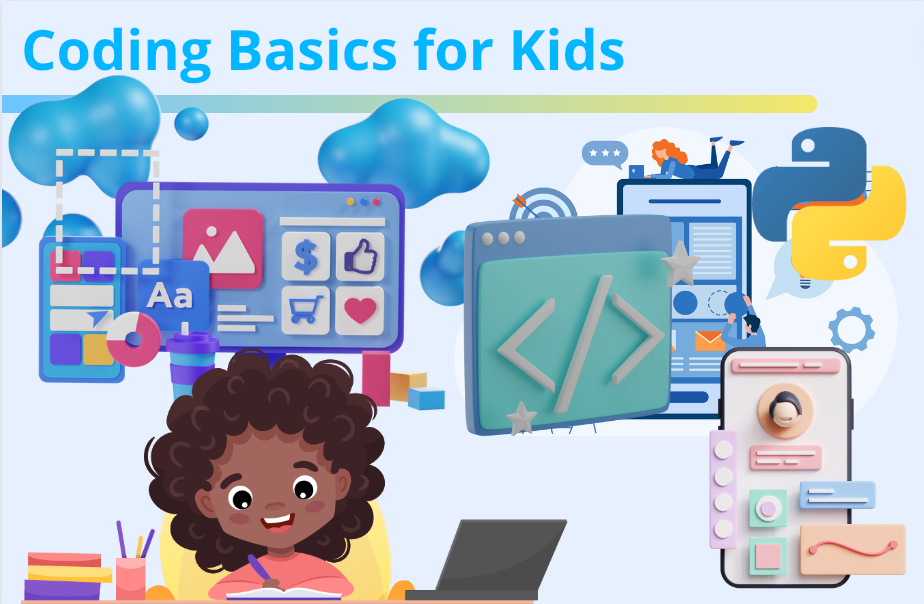
What Are Basic Coding Concepts?
Basic coding concepts serve as the essential building blocks of programming, influencing how developers create software applications across varying environments. At its core, coding is the process of translating human ideas into a language that computers can understand, allowing them to perform specific tasks. These foundational concepts are not limited to any single programming language but are universal across all languages, making them imperative for anyone wishing to delve into the world of programming.
The significance of basic coding concepts cannot be overstated. They encompass key elements that every programmer utilizes. For instance, syntax refers to the set of rules that defines the combinations of symbols in a programming language. Understanding syntax is critical, as it dictates how code must be written for the computer to interpret it correctly. Semantics, on the other hand, deals with the meaning of these syntactic structures, bridging the gap between the written code and the intended functionality. Lastly, logic governs the flow of a program, allowing programmers to implement reasoning through conditions and loops, thereby controlling how data is processed.
These fundamental principles not only guide programmers in writing effective code but also enhance their problem-solving skills, enabling them to think critically about how to approach various challenges. For aspiring developers, grasping basic coding concepts lays the groundwork for deeper learning, as they move on to more intricate algorithms and advanced constructs. Whether one is interested in web development, software engineering, or data analysis, understanding these foundational elements will ensure a smooth journey in mastering any programming language.
Core Elements of Basic Coding Concepts
Understanding the core elements of basic coding concepts is essential for anyone interested in programming. These foundational components include variables, data types, control structures, functions, and algorithms. Each of these elements plays a significant role in how coding is approached, and together they form the backbone of effective programming.
Variables are fundamental in coding; they act as containers that hold data, allowing programmers to store and manipulate information. For instance, a variable named ‘score’ can be used in a game to track a player’s points. This concept underpins many coding scenarios, as it facilitates the dynamic handling of values throughout a program’s execution.
Next, data types specify the kind of data that can be stored in a variable. Common data types include integers, floating-point numbers, strings, and booleans. Each type has its own properties and uses. For example, using a string type is essential when handling textual information, while integer types are utilized for numeric calculations. Understanding data types is crucial for effective type management and helps to prevent errors that can arise from data mismatches.
Control structures are vital for guiding the flow of a program. They include conditional statements like ‘if’ and loops such as ‘for’ and ‘while.’ These structures determine how and when lines of code are executed, enabling the creation of complex logic and repetitive tasks within programs.
Functions, on the other hand, encapsulate code into reusable blocks that can be called upon as needed. This modular approach promotes cleaner code and enhances readability. Lastly, algorithms are step-by-step procedures for solving specific problems. They outline processes for tasks like sorting and searching data.
In conclusion, grasping these core elements of basic coding concepts is essential for aspiring programmers. By understanding how variables, data types, control structures, functions, and algorithms interact, individuals can begin writing effective code and tackle programming challenges with confidence.
Common Mistakes When Learning Basic Coding Concepts
As newcomers embark on their journey into the world of programming, they often face various challenges that can hinder their progress. One of the most critical areas where beginners tend to stumble is in misunderstanding the syntax of the programming language they are learning. Syntax errors are common, as even a misplaced character can render a program inoperative. It is crucial for learners to pay careful attention to the specific rules of syntax associated with their chosen language, as these rules are the foundation upon which all coding structures are built.
Another common pitfall relates to variable scope. Many beginners struggle to grasp the concept of variable scope, which refers to the visibility and lifetime of variables within different parts of a program. Failing to understand this concept can lead to unintended behavior, such as referencing variables that are out of scope, causing confusion and frustration. To mitigate this issue, it is important to clearly define where variables are declared and ensure comprehension of how variables interact within functions and loops.
Moreover, the misuse of loops and conditionals is another area prone to errors among learners. Beginners often fall into the trap of creating infinite loops by failing to establish correct exit conditions. This issue, coupled with improper conditional statements, can lead to unexpected results in code execution. A solid understanding of control structures is essential for learners to create efficient and effective code. Practicing these basic coding concepts through myriad examples will help reinforce the correct usage and improve coding accuracy.
By identifying and addressing these common mistakes, learners can build a stronger foundation in basic coding concepts, facilitating a smoother transition into more advanced programming skills. A careful and reflective approach to learning can ultimately enhance the coding journey.
Resources for Further Learning Basic Coding Concepts
Expanding one’s knowledge of basic coding concepts is fundamental for anyone looking to delve deeper into the field of programming. Fortunately, there is an abundance of resources available that can aid in this learning journey. These resources range from online courses to books, coding communities, and interactive platforms, each catering to different learning preferences.
Online platforms like Coursera, Codecademy, and Udemy offer a variety of courses focusing on basic coding concepts and beyond. These courses often provide structured learning paths, allowing beginners to grasp essential programming principles at their own pace. Additionally, many of these platforms feature hands-on exercises, which are critical for reinforcing theoretical knowledge through practical application.
For those who prefer traditional learning methods, books such as “Automate the Boring Stuff with Python” by Al Sweigart and “Head First Java” by Kathy Sierra and Bert Bates serve as excellent introductory texts. These books not only cover basic coding concepts but also encourage readers to work on real-world projects, thereby bridging the gap between theory and practice.
Joining coding communities, such as Stack Overflow or GitHub, can also enhance one’s learning experience. Engaging with these communities allows learners to ask questions, share knowledge, and collaborate on coding projects. This peer interaction can be invaluable, providing insights that may not be readily found in textbooks or online courses.
Interactive coding platforms like LeetCode and HackerRank offer a gamified approach to coding practice. They enable users to tackle coding challenges that reinforce basic concepts while also introducing more advanced topics. Continuous practice through these platforms can greatly enhance coding skills.
In summary, utilizing a combination of these resources—online courses, books, community engagement, and interactive coding platforms—can significantly enrich one’s understanding of basic coding concepts. Continuous learning and practice remain essential in mastering the art of coding.






Leave a Reply